Tanzania set to tap into the OECMs benefits for biodiversity conservation
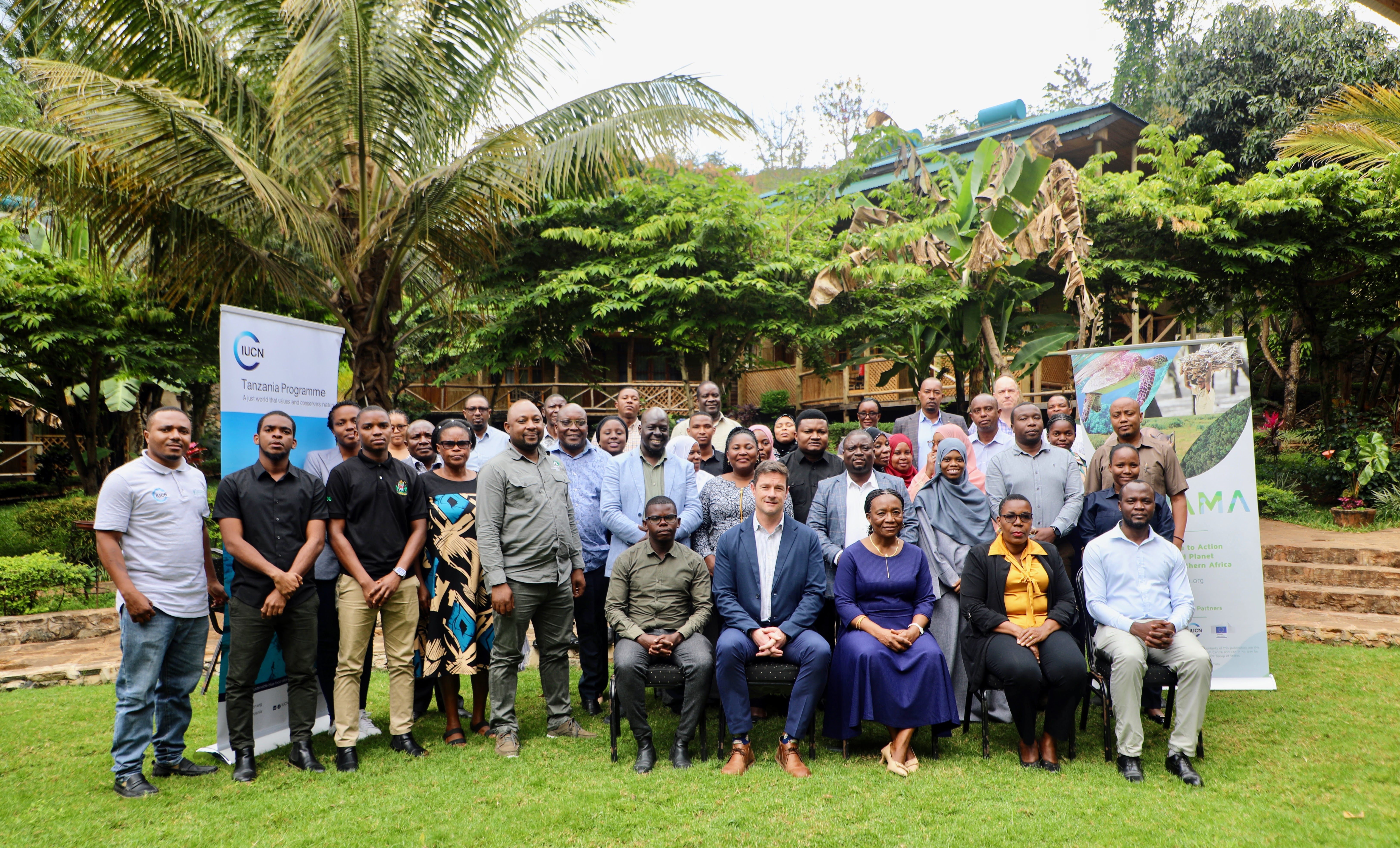
On 18-19 August 2025, Tanzania convened its first National Dialogue Workshop on Other Effective Area-Based Conservation Measures (OECMs) — a milestone in recognising conservation efforts beyond traditional protected areas, across both marine and terrestrial ecosystems.
OECMs offer a key avenue for governments and non-state actors to achieve target three of the Kunming-Montreal Global Biodiversity Framework(KMGBF) 30x30, through recognising sites and territories with effective and equitable conservation outcomes.
Photo: IUCN Tanzania/Emmanuel Minja
Ms. Martha Ngalowera, Principal Environment Officer at the Vice President’s Office giving her remarks at the opening of the national dialogue for OECMs in Morogoro.
Photo: IUCN Tanzania/Emmanuel Minja

Mr. Daniel Marnewick, Regional Area-based Conservation Coordinator presenting at the first Tanzania's national dialogue for OECMs in Morogoro.
Photo: IUCN Tanzania/Emmanuel Minja

A group of participants from Zanzibar island brainstorming action items for developing OECMs in specific landscapes of Tanzania during the OECMs dialogue.
Photo: IUCN Tanzania/Emmanuel Minja

A group of participants discussing action items for developing OECMs in specific landscapes of Tanzania during the OECMs dialogue
Photo: IUCN Tanzania/Emmanuel Minja

Organised collaboratively by Tanzania’s Vice Presidents Office (VPO), IUCN, Worldwide Fund for Nature (WWF), Frankfurt Zoological Society (FZS), and The Nature Conservancy (TNC), the workshop brought together a diverse group of stakeholders, including government agencies, civil society organisations, academia, research institutions, and international partners to co-create a national roadmap for recognising and reporting OECMs. This event reflects the collective commitment to inclusive and effective conservation. During the workshop, the OECM consortium welcomed the inclusion of Wetlands International, African Wildlife Foundation, and support from GIZ and European Union. This strong consortium of partners, under the oversight of the VPO, is well placed to support the long-term commitment to implement a national OECM roadmap which will result in the development of a national OECM framework strategy, positioning Tanzania to effectively and inclusively identify, strengthen and report OECMs, as a key contribution to achieving the Convention on Biological Diversity (CBD) Global Biodiversity Framework.
“OECMs represent a real opportunity to recognise and strengthen the diverse contributions to area-based conservation that take place beyond protected areas. That’s why IUCN has developed an inclusive, partner-driven approach that brings together the right ingredients to help countries build robust national OECM roadmaps and frameworks.” Says Daniel Marnewick, Regional Area-based Conservation Coordinator for IUCN ESARO.
Key take-away’s include the unique role OECMs can play in connecting and strengthening Tanzania’s extensive protected area network; the existing strong legal framework that could help recognise OECMs; the diverse governance and management types that were identified as candidate OECMs; and growing strong consortium and the cross-sectoral engagement and interest to continue to support this OECMs journey.
This national dialogue comes at a right time, as Tanzania has recently unveiled its 2050 strategic vision, which also underscores the importance of biodiversity conservation and sets targets to advance conservation efforts for sustainable development. Remarking at the opening of this national dialogue, the principal environmental officer from the Vice President's office, Ms. Martha Ngalowera highlighted on the alignment of this process and Tanzania's Vision 2050.
“The Vision 2050 of Tanzania clearly sets ambitious goals and commitments for building a nation that conserves and uses natural resources efficiently. We must therefore achieve these goals by promoting biodiversity conservation beyond formally protected areas,” noted Ms. Martha Ngalowera, Principal Environment Officer at the Vice President’s Office.
In 2018, the concept of "Other Effective Area-Based Conservation Measures" (OECMs) was formally defined through CBD Decision 14/8. OECMs are geographically defined areas distinct from traditional Protected Areas (PAs) but managed in ways that yield positive, sustained, and long-term outcomes for biodiversity conservation, including associated ecosystem functions, services, and, when applicable, cultural, spiritual, socio-economic, and other locally significant values.
This first workshop is funded by the BIOPAMA and Bahari Mali projects, and forms part of the IUCN ESARO’s regional and national leadership and commitment to strengthening institutional alignment and long-term biodiversity outcomes.


The 30th Conference of the Parties to the United Nation Framework Convention of Climate Change (…

Victoria Falls, Zimbabwe, 24 July 2025 — The Indo-Burma Ramsar Regional Initiative (IBRRI)…

World Wetlands Day is celebrated annually on 2 February. To celebrate this year’s theme of “…