Stronger institutions, empowered communities, and conservation outcomes: BIOPAMA’s living legacy
Abu Dhabi, 11 October 2025. The Biodiversity and Protected Areas Management Programme (BIOPAMA) has left a lasting mark on global conservation, strengthening the foundations for more effective and equitable protection of nature and the communities who depend on it.
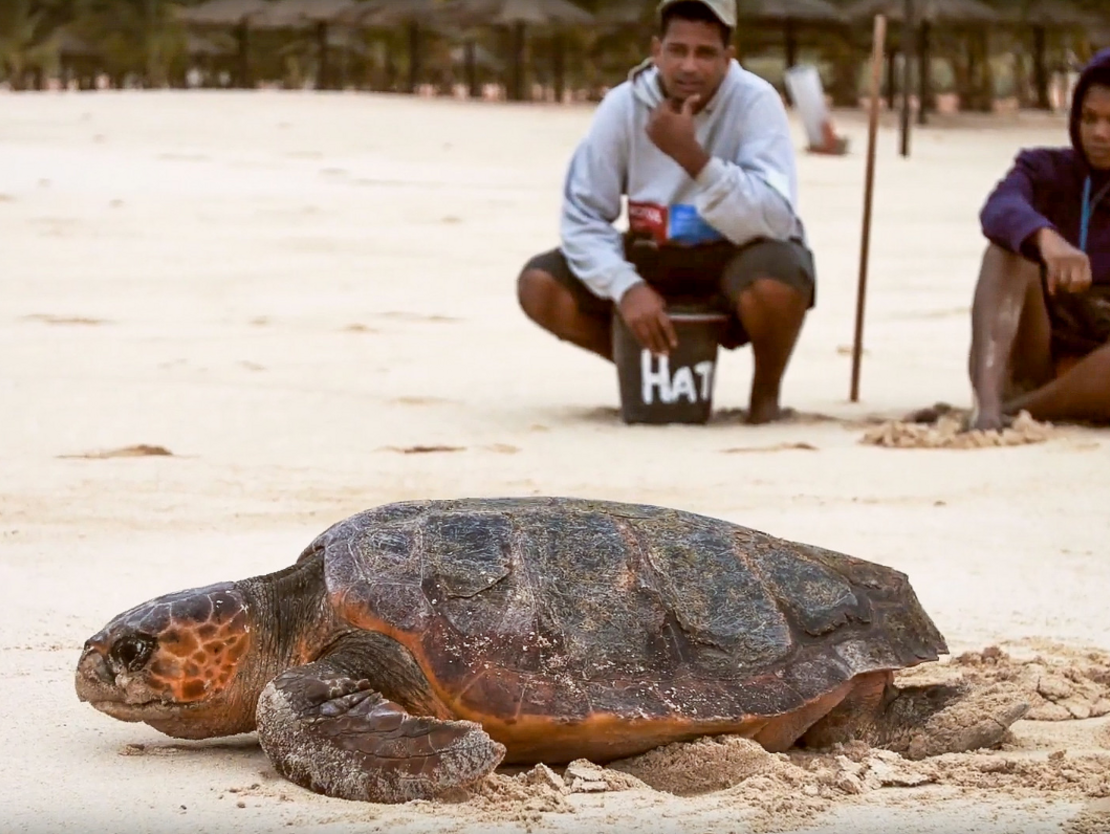
After 13 years of intervention through BIOPAMA, the programme demonstrates impact that transformed the conservation landscapes in Africa, the Caribbean and the Pacific.
BIOPAMA’s impacts include:
Global engagement: 79 countries benefiting, with lessons learnt and practices replicable globally.
160 grants, with a diverse stakeholder participation; 30 beneficiary organisations are IUCN Members.
Alignment with global development priorities, with contributions to 12 of the 17 SDGs.
Five regional observatories for protected areas and biodiversity established, to support data collection, analysis, monitoring and reporting, develop the capacities of staff and organisations to manage this information, and provide policy guidance for better decision making on biodiversity conservation.
Tangible conservation results, by supporting action on the ground in 251 protected areas.
Capacity built and expertise enhanced for more than 4000 individuals.
Strengthened the institutional framework of more than 150 institutions.
Democratising biodiversity data, by facilitating the access to data in 89 countries accessing the services of the regional observatories.
Working across 79 countries, BIOPAMA has established regional observatories for protected areas and supported 160 grantees – including 30 IUCN members – to advance innovative, locally grounded conservation actions. Its impact extends across borders, institutions, and ecosystems, contributing directly to 12 of the 17 Sustainable Development Goals.
The BIOPAMA Programme, funded by the European Union and the Organisation of African, Caribbean and Pacific States and implemented by IUCN and the Joint Research Centre of the European Commission, was launched in 2012 to provide data, capacity building, governance support and funding for protected and conserved areas. Over more than a decade, the initiative has strengthened the management of thousands of sites, established regional observatories and information systems, and equipped governments and local actors with the tools to ensure that biodiversity conservation also supports livelihoods and climate resilience.
BIOPAMA’s investment in knowledge and capacity has been transformative. Through the establishment of five regional observatories in African, Caribbean and Pacific countries, the programme has centralised critical biodiversity and conservation data, enabling stronger, evidence-based decision making. Today, more than 150 institutions across 89 countries rely on this data to guide action. This major achievement led to the recognition of these “regional observatories” as CBD Technical and Scientific Cooperation Support Centres.
On the ground, BIOPAMA has supported over 251 protected areas, equipping managers and communities with tools to improve governance and effectiveness. More than 4,000 people have been trained in using these resources, ensuring that knowledge translates into long-term conservation outcomes.
“BIOPAMA’s thirteen years of action have left a living legacy: a stronger, more connected and more inclusive global network of protected and conserved areas that will be critical to achieving international biodiversity and sustainable development targets in the decade ahead.” said Stewart Maginnis, IUCN Deputy Director General. “By improving governance, strengthening management effectiveness and empowering conservation leaders, BIOPAMA has provided the kind of foundations we need to deliver on the Global Biodiversity Framework and other global commitments. Its legacy will be carried forward in every region it has supported and inspire the global community.”
In Kenya, the BIOPAMA programme supported 15 grants and over 10 conservancies were supported to improve governance and management. In the Lumo Conservancy, through inclusive engagement and capacity building, the initiative has strengthened conservation from the ground up — empowering women and youth, equipping rangers with human rights training and essential tools, and fostering knowledge exchange among conservancies.
With the Caribbean being a biodiversity hotspot, the BIOPAMA programme has put a spotlight on the incredible work being done to restore, conserve and strengthen management in the Caribbean. Through a collaborative effort facilitated by IUCN, BIOPAMA has enhanced the understanding and application of the IUCN Protected Area Management Categories within The Bahamas. Over a nine-month, three-stage workshop series involving key national and regional stakeholders, The Bahamas has laid a foundation for more effective, transparent, and internationally aligned conservation efforts.
With a legacy of strengthened institutions, empowered practitioners, and connected data systems, BIOPAMA has shown that when science, partnerships, and local action converge, conservation delivers lasting benefits for both people and planet.
As the Programme formally concludes at the IUCN Congress 2025, the conservation community commits to sustain BIOPAMA’s achievements by embedding its tools and systems into national and regional institutions, scaling up financing for protected and conserved areas, and ensuring that equity and rights remain central in conservation. IUCN's support in these endeavours is guaranteed through its new partnership with the European Union under the COLOURS project.
Resources:
Photo gallery: BIOPAMA and BEST knowledge sharing journey | Flickr
Key facts about BIOPAMA: https://iucn.org/sites/default/files/2025-10/biopama-impact-global_21.pdf
BIOPAMA Caribbean legacy report: BIOPAMA_Brochure_Caribe_011.pdf - Google Drive
BIOPAMA Eastern and Southern Africa impact report: Brochure-ESA_BIOPAMA-renewed-links-w.-Zambia.pdf
BIOPAMA Pacific impact brief: https://iucn.org/sites/default/files/2025-10/oro_regional_impact_report_notification_shareable_compressed.pdf
BIOPAMA West and Central Africa impact report: https://iucn.org/sites/default/files/2025-10/paco_biopamaii_impactreport_2024.pdf
The BIOPAMA grants: Regions - action biopama
BIOPAMA events at the IUCN Congress: BIOPAMA Congress Calendar
COLOURS project: COLOURS | IUCN
Quotes:
HE Silvia Museiya, Permanent Secretary, Kenya
“Kenya’s conservancies are living proof that conservation and community well-being can go hand in hand. With 65% of our wildlife found on community and private lands, conservancies form vital bridges between protected areas—ensuring ecological connectivity while empowering people as custodians of nature. The BIOPAMA programme has made a major contribution towards enhancing governance, improving resources management and significantly reducing illegal activities.”
Lakeshia Anderson, Executive Director of the Bahamas National Trust
“The Bahamas National Trust proudly celebrates the successful support extended to us by BIOPAMA, marking a significant milestone in advancing protected area management. This achievement not only strengthens The Bahamas' protected area system but also demonstrates the power of regional cooperation, technical assistance, and capacity building to safeguard biodiversity and ecosystem services for generations to come.”
Conservator General Adama Tondossama, Director General of the Ivorian Office of Parks and Reserves (OIPR)
“The support from the BIOPAMA programme has enabled Ivory Coast to take decisive steps in the development and sustainable management of its protected areas. The inclusion of Comoé and Taï National Parks on the IUCN Green List, with the BIOPAMA support, is a testament to the excellence of our conservation and governance practices. For the Banco National Park, BIOPAMA has contributed to the development of ecotourism, offering urban populations a unique space for discovery and awareness-raising in the heart of Abidjan. "
Nunia Thomas, Director, NatureFiji- MareqetiViti
“With over 90% of our land under indigenous ownership, this initiative strengthens our people’s role as custodians of biodiversity. In Fiji, BIOPAMA has been truly empowering, placing communities at the heart of conservation and giving rise to solutions that are locally driven yet globally significant. By strengthening our organisational capacity to undertake assessments on effectiveness in four Key Biodiversity Areas, we have built locally driven and contextually relevant conservation action.”
Case study:
A BIOPAMA grant that led to the rediscovery of a species!
Build the Capacity for Comprehensive Survey and Monitoring of Key Wildlife Species and Habitat Features in the Niokolo-Koba National Park, Senegal (Western Africa)
Link to the more information: - action biopama
This project, funded by a €495,240.94 Medium Grant, was implemented over four years, from September 2020 to November 2024. Led by Panthera in collaboration with Senegal's Directorate of National Parks (DPN), the project aimed to enhance the management and governance of Niokolo-Koba National Park by addressing existing limitations in biodiversity monitoring and data collection. The initiative focused on developing and implementing a comprehensive, standardized, and replicable park monitoring system targeting key wildlife species and habitat features. This system was designed to provide relevant and updated ecological information, enabling the DPN to make informed management decisions and strengthen on-site infrastructure and equipment for patrolling and poaching control.
The project's implementation brought significant improvements to the park's conservation efforts. Notably, the deployment of 584 remote camera traps across the park facilitated the collection of extensive data on medium-sized and large mammal species, including the critically endangered West African lion, leopards, and African wild dogs. These efforts contributed to the doubling of the park's lion population to approximately 30 to 40 individuals since 2017. Additionally, the project led to the unexpected rediscovery of the giant pangolin in the park, a species not recorded in Senegal for nearly 25 years. The enhanced monitoring capabilities and increased capacity of park staff played a crucial role in improving the park's state of conservation, ultimately leading to its removal from the UNESCO List of World Heritage in Danger in July 2024.


The 30th Conference of the Parties to the United Nation Framework Convention of Climate Change (…

Victoria Falls, Zimbabwe, 24 July 2025 — The Indo-Burma Ramsar Regional Initiative (IBRRI)…

World Wetlands Day is celebrated annually on 2 February. To celebrate this year’s theme of “…