Seven New Sites from China and Brazil Join the IUCN Green List, Four Sites Renewed
Gland, Switzerland, 16 December 2025 — Seven exceptional protected areas from China and Brazil have been added to the IUCN Green List of Protected and Conserved Areas, the global standard for effective and equitable area-based conservation. In addition, four existing Green List sites in China and France have had their status renewed, demonstrating sustained commitment to conservation excellence.
Photo: Mauricio de Paiva
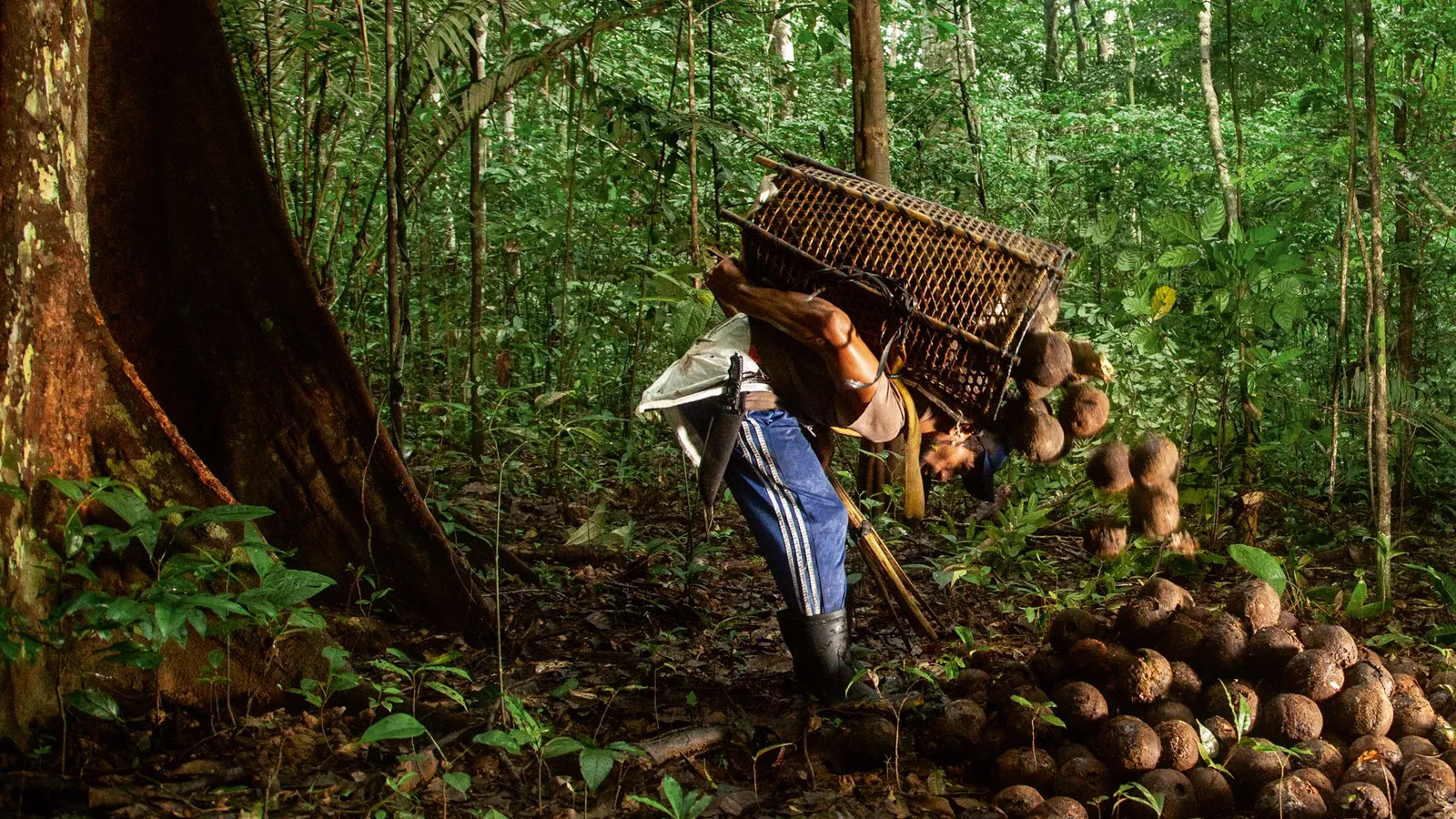
Photo: Ile du Grand Connetable, France

Photo: Ecrins National Park, France

These new additions represent diverse ecosystems spanning two continents. Through rigorous assessments, each site has demonstrated outstanding achievements in conservation effectiveness, community engagement, and governance.
China: Six sites advancing conservation excellence
Gansu Section of the Giant Panda National Park
Established in 1978 and now part of the Giant Panda National Park, this section ranks first among all nature reserves nationwide with 111 wild giant pandas. The reserve protects rare and endangered wildlife including giant pandas and Davidia involucrata in Gansu Province's sole North Subtropical biological landscape zone, achieving effective forest ecosystem protection with gradually increasing forest coverage.
Hunan Bamianshan National Nature Reserve
China's first nature reserve focused on South China Tiger protection, located in the transitional zone between subtropical and tropical regions. The reserve protects rare species including Yellow-bellied Tragopan and White-necked Laughingthrush, with natural forest coverage increasing from 64.11% to 72.40%.
Jiuzhaigou National Nature Reserve
A UNESCO World Heritage Site and China's first nature reserve established for protecting natural scenery, renowned for its "Six Wonders"—alpine lake clusters, cascading waterfalls, vibrant forests, snow-capped peaks, blue ice formations, and Tibetan cultural heritage. The reserve serves as a core habitat for giant pandas in the Minshan Mountain Range and has documented significant increases in biodiversity, with 81 new macrofungi species, 155 new plant species, and 203 new insect species recorded since 2002.
Sichuan Panzhihua Cycad National Nature Reserve
China's only national reserve dedicated to cycad plant conservation, protecting over 389,200 naturally growing Cycas panzhihuaensis—living fossils that have survived 200-300 million years. This wild cycad forest has the northernmost latitude, highest altitude, largest area, and most concentrated distribution on the Eurasian continent, with the species' IUCN Red List status improved from Endangered to Vulnerable.
Sichuan Hua'e Mountain National Nature Reserve
A 46,534-hectare reserve protecting a representative North subtropical forest ecosystem and ancient relict species including Sichuan thuja (Thuja sutchuenensis) and Chinese yew (Taxus chinensis). The reserve hosts 92 state-level key protected species with complete faunal assemblages including 228 bird and 69 mammal species, with natural forest coverage increasing from 75.39% to 76.00%.
Yunnan Yunlong Tianchi National Nature Reserve
Established in 1983 and upgraded to national status in 2012, this 14,475-hectare reserve is the southernmost habitat of the Yunnan snub-nosed monkey. Forest coverage has reached 93% with the snub-nosed monkey population growing from 130 to 167 individuals, and biodiversity records increasing by 131 vascular plant species and 166 vertebrate species.
Brazil: Community-led conservation in the Amazon
Sustainable Development Reserve of Iratapuru River
Covering 806,184 hectares in Amapá State, this reserve demonstrates a pioneering model of community-based conservation where traditional populations lead extractive activities, primarily collecting Brazil nuts and white breu. The reserve's governance ensures active community involvement in decision-making, with benefit-sharing generating resources for conservation initiatives and local economic development.
Renewed sites: Sustained commitment to effectiveness
Four sites have renewed their Green List status, demonstrating long-term conservation commitment.
In China, Mount Huangshan Scenic Area continues its legacy as a UNESCO World Heritage Site with forest coverage rising from 56% in 1976 to 98.29% today, achieving 45 consecutive years without forest fires and becoming China's first zero-carbon mountain scenic area. Wudalianchi Geological Park, known as a "natural volcano museum" with 14 volcanoes and 5 major volcanic barrier lakes, maintains its status as China's first geological park with legislative protection, effectively managing its 1,060-square-kilometer area through classified protection zones.
In France, Écrins National Park maintains excellence across its high mountainous landscapes with 150 peaks above 3,000 meters, protecting 3,179 plant species and 2,175 animal species. Ile du Grand-Connétable National Nature Reserve, a marine protected area on the Amazon coast, continues protecting thousands of pairs of seabirds and marine biodiversity across its 7,852 hectares off French Guiana's coast.
A growing global movement
With these new listings and renewals, the IUCN Green List continues to expand its global reach, now encompassing over 110 Listings, covering 230+ sites across 23 countries and over 300 applicant and candidate sites in 60+ countries. Each Listed site has undergone rigorous, independent assessment, ensuring it meets the highest standards of conservation effectiveness, equity, and sustainability.
The IUCN Green List serves as a complementary indicator for Target 3 of the Kunming-Montreal Global Biodiversity Framework, supporting the global goal of effectively and equitably conserving 30% of the planet's lands and waters by 2030.
IUCN Academy now offers a free, self-paced online course, "Introduction to the IUCN Green List of Protected and Conserved Areas," available in English, French, and Spanish. Whether you manage a protected area or are passionate about conservation, this course equips you with the knowledge and skills to support effective, equitable, and sustainable conservation. Enrol today at https://ow.ly/jvym50XGgVK.
With our partners—the Gordon and Betty Moore Foundation, the French Development Agency (AFD), the German Federal Ministry for Economic Cooperation and Development (BMZ), the Deutsche Gesellschaft für Internationale Zusammenarbeit (GIZ), the Ministry of Environment of the Republic of Korea, Esri, the world's leading supplier of Geographical Information Systems (GIS) software, and Huawei—we look forward to scaling up the IUCN Green List as a key metric for 'conservation done well' worldwide.
For more information about the IUCN Green List and the newly listed sites, visit www.iucn.org/greenlist.


The 30th Conference of the Parties to the United Nation Framework Convention of Climate Change (…

Victoria Falls, Zimbabwe, 24 July 2025 — The Indo-Burma Ramsar Regional Initiative (IBRRI)…

World Wetlands Day is celebrated annually on 2 February. To celebrate this year’s theme of “…