Ramsar COP15 concludes with strengthened global commitment to wetland restoration and inclusive conservation
The 15th Meeting of the Conference of the Contracting Parties (COP15) to the Ramsar Convention on Wetlands brought together governments, civil society and international organisations to reaffirm global commitments to the conservation and wise use of wetlands. Held in Zimbabwe, COP15 provided a critical platform to address emerging challenges and adopt new resolutions on wetland restoration, the protection of migratory birds and key wetland-dependent species, and the promotion of equitable wetland governance.
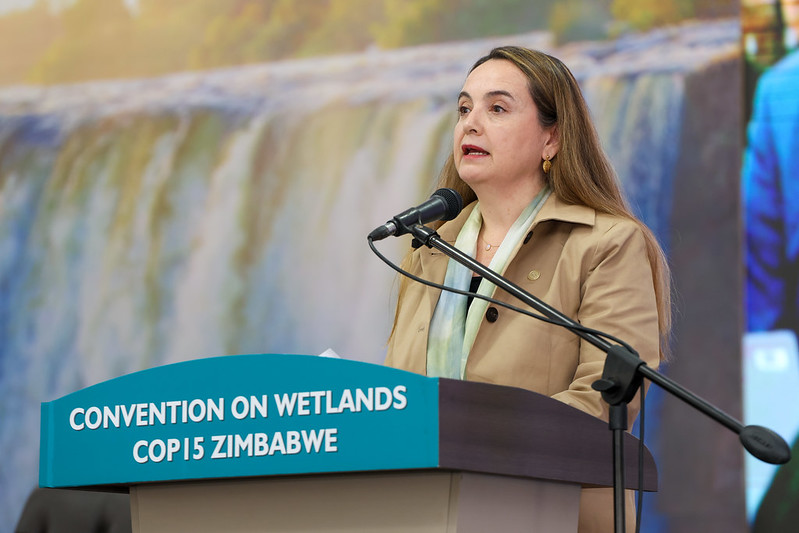
IUCN Director General, Dr Grethel Aguilar, delivers her opening statement to Ramsar COP15
Photo: Ramsar Convention on Wetlands
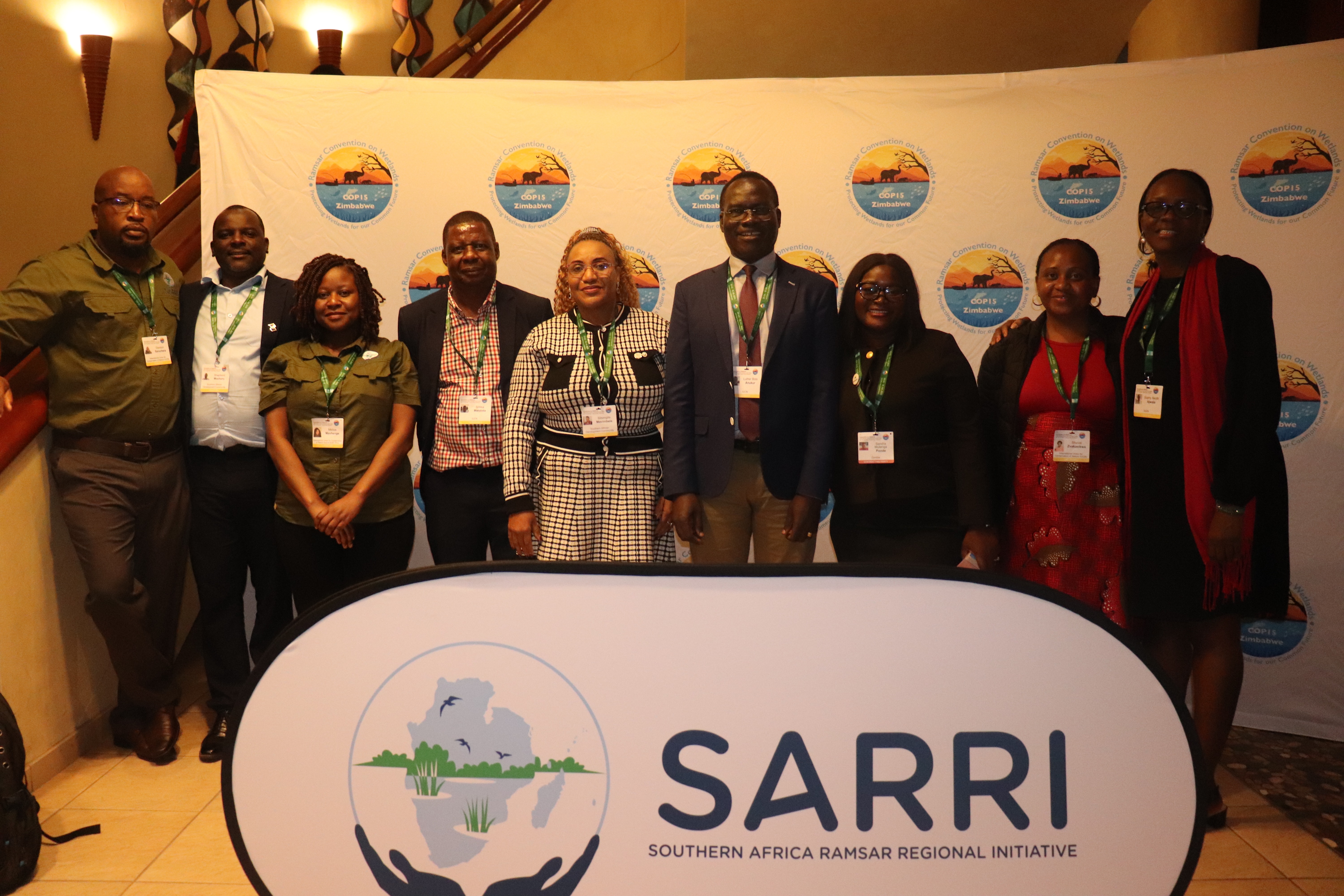
Launch of the Southern Africa Ramsar Regional Initiative (SARRI) at Ramsar COP15
Photo: IUCN Team
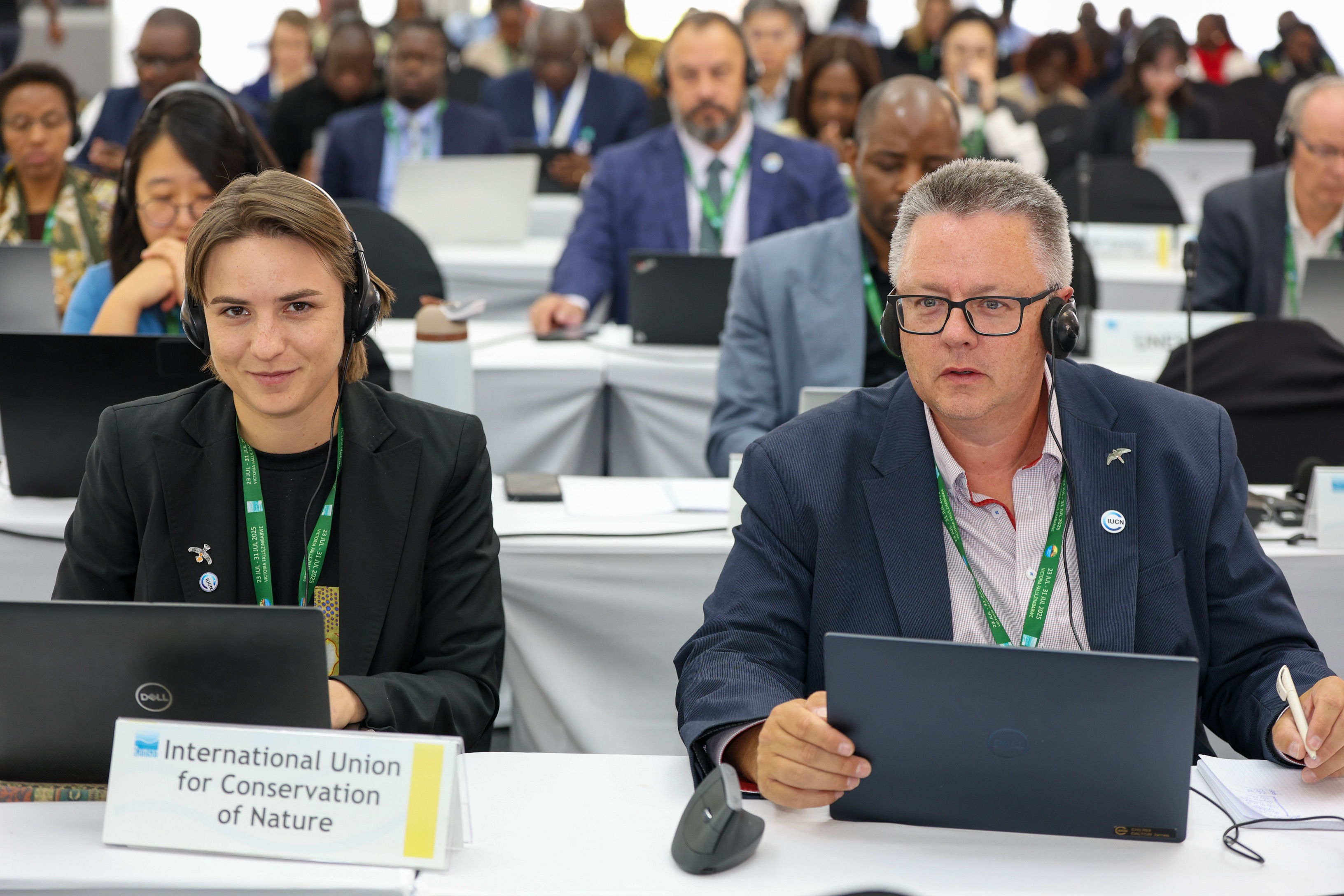
IUCN delegation members at Ramsar COP15
Photo: Ramsar Convention on Wetlands
IUCN delegation and the Secretary General of the Convention on Wetlands, Dr Musonda Mumba, at Ramsar COP15
Photo: Ramsar Convention on Wetlands

Zimbabwe served as an exceptional host, demonstrating strong commitment to the objectives of the Ramsar Convention. Set against the backdrop of one of the world’s most iconic World Heritage Sites – Victoria Falls, or as it’s called in the Lozi language, “Mosi-oa-Tunya” (the smoke that thunders) – the conference offered a powerful reminder of the unparalleled value of nature and water. The surrounding biodiversity was ever-present, with elephants and hippos occasionally crossing paths with delegates near their accommodations, underscoring the urgency and relevance of the discussions.
New resolutions boost restoration and protected area designations
All proposed resolutions were adopted at COP15, signalling a global resolve to protect and restore wetlands. While negotiations were often long and complex, significant progress was made on issues emphasised by IUCN and other environmental organisations. The guidance and interventions by International Organisation Partners to the Convention (IOPs) such as IUCN were greatly appreciated by the Convention Parties, reflecting the shared understanding that cooperation is essential to achieving common goals for nature.
Among the most notable outcomes was the adoption of a resolution on wetland restoration. Parties committed to developing or improving national legislation and policies for the restoration of degraded freshwater ecosystems, in addition to protection and sustainable management, and were invited to consider the Freshwater Challenge as a means to enhance national implementation of the Convention.
Several adopted resolutions also focus on key wetland-dependent species, including river dolphins and waterbirds. Parties agreed to strengthen action on flyway conservation to protect migratory birds and endorsed the establishment of the Global Waterbird Estimates Partnership.
A resolution on the application of specific criteria to guide the designation of Wetlands of International Importance was also adopted. These criteria rely heavily on population estimates and ecological data provided by the IUCN Red List of Threatened SpeciesTM and IUCN’s global network of Specialist Groups.
Governance, inclusion and urban wetlands
Parties adopted a resolution on equitable governance and the effective conservation of wetlands as protected areas and OECMs (Other Effective Area-Based Conservation Measures). This resolution supports more inclusive and rights-based conservation and contributes to broader international targets for area-based protection.
Additional resolutions were adopted on traditional knowledge, youth engagement and the management of urban wetlands, recognising the importance of diverse knowledge systems, intergenerational participation and the role of wetlands in urban sustainability and resilience.
Strategic planning and finance
Two of the most heavily debated topics at COP15 were the Convention on Wetlands 5th Strategic Plan and finance. After extended negotiations, Contracting Parties adopted a new strategic plan for the Convention, structured around four goals and 18 targets. The Scientific and Technical Review Panel was tasked with developing indicators to monitor progress towards those.
While a clear breakthrough on long-term financing was not reached, Parties did agree on a 4.1% increase in the core budget of the Convention. This brings the total budget for the 2025-2027 triennium to CHF 15.5 million, marking a modest but important step towards reinforcing its operational capacity.
Strengthening cooperation ties for wetland conservation
Outside the plenary, COP15 served as an excellent platform for fruitful bilateral discussions with IUCN Members and constituencies, particularly at the IOP Pavilion.
During a total of 15 side events, IUCN made a series of announcements and hosted critical discussions on topics essential for wetland conservation and restoration:
- The room was full for the launch of the Southern African Regional Initiative (SARRI), which will have its Secretariat hosted by the IUCN Eastern and Southern Africa Regional Office.
- The Indo-Burma Ramsar Regional Initiative (IBRRI) officially launched its Strategic Plan 2025–2030 during a COP15 side event. The plan sets out a collaborative, transboundary framework to halt and reverse the loss of wetlands across its Member States: Cambodia, Lao PDR, Myanmar, Thailand and Viet Nam. With IUCN now hosting two Ramsar Regional Initiatives, there is strong potential for interregional collaboration and cross-pollination. The Indo-Burma initiative, with its long-standing and in-depth experience in regional cooperation for wetland conservation and wise use, has shared valuable insights to support the establishment of the Southern African initiative.
- BRIDGE Programme: Grants on gender mainstreaming and women leadership were officially launched during a well-attended side event, where Dayana Blanco, an Indigenous Aymara woman from Bolivia and Ramsar Wetland Conservation Award winner said: “If you invest in a woman, you help save lives, nature and the community”.
- During the event “Mobilising innovative financing to deliver the objectives of the Convention on Wetlands”, the importance of private sector engagement for wetland conservation was highlighted.
- “Scaling restoration of degraded freshwater ecosystems and the role of the Freshwater Challenge” informed Parties about opportunities that align with the new resolution on wetland restoration.
- “Wetlands for climate” highlighted the many co-benefits of prioritising wetland conservation and restoration in climate policy and finance for enhanced mitigation, adaptation and resilience.
- The event on an “Overseas dialogue between the Caribbean, Europe and the Mediterranean” drew in a crowd eager to learn how to build skills and knowledge to address climate change through wetland-based solutions.
- During the side event on wetlands at risk, Parties were urged to act on the Montreux Record, a register of wetland sites, and ensure good governance, equity, design, planning, management effectiveness and successful conservation outcomes using tools such as the IUCN Green List.
Lastly, "Wetlands and regional cooperation: strategies for resilience and sustainability in Central America" presented an opportunity to facilitate the exchange of good practices and lessons learnt on successful Marine Protected Areas (MPAs) management, wetland restoration and community governance.


The 30th Conference of the Parties to the United Nation Framework Convention of Climate Change (…

Victoria Falls, Zimbabwe, 24 July 2025 — The Indo-Burma Ramsar Regional Initiative (IBRRI)…

World Wetlands Day is celebrated annually on 2 February. To celebrate this year’s theme of “…