From planning to action: Designing practical solutions for Fiji’s kava and fisheries sectors
IUCN Oceania Regional Office (IUCN Oceania), in collaboration with the Government of Fiji, local communities, civil society organisations, and development partners, officially opened the two-day BIODEV2030 Territorial Workshop in Labasa today. The event brings together representatives from the kava farming and coastal fisheries sectors to co-create innovative solutions aimed at halting biodiversity loss while supporting sustainable livelihoods. This workshop marks a significant milestone in Phase II of the BIODEV2030 initiative, which is dedicated to moving from planning and commitment to action on the ground.
Photo: BIODEV Labasa Workshop Group Photo
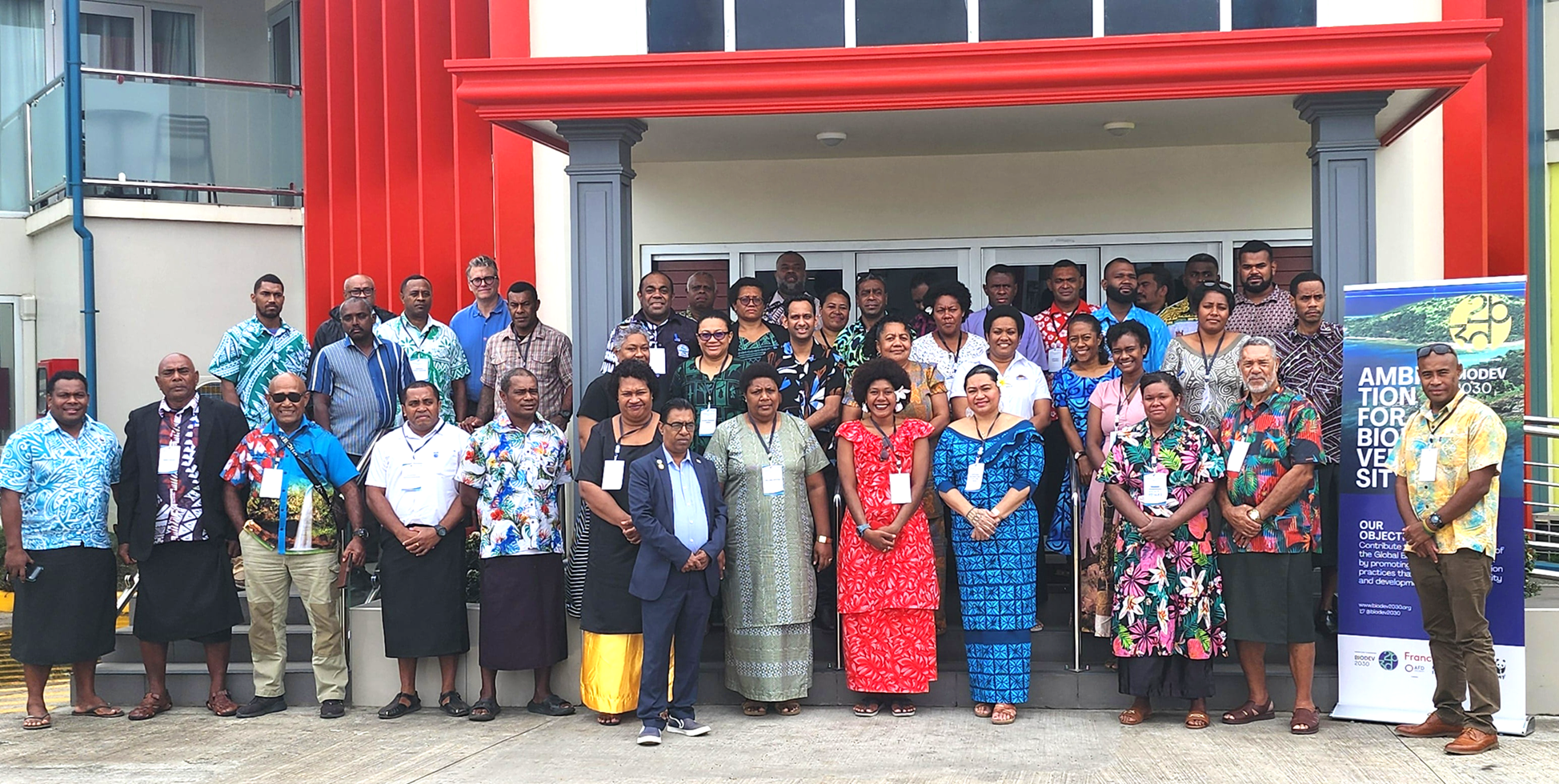
Photo: Regional Director of IUCN Oceania Leituala Kuiniselani Toelupe Tago delivering the opening remarks

Photo: Consultants of the BIODEV2030 project giving an overview of the workshop

Photo: Discussions during breakout groups

Photo: Groups discuss key issues

Photo: Women's group representative giving a project update

In her opening remarks, IUCN Oceania Regional Director Leituala Kuiniselani Toelupe Tago highlighted the urgent need for collective action to safeguard Fiji’s biodiversity and build resilience to climate change. “At the core of co-creating and co-designing, - is the need to facilitate platforms to talanoa, to convene consultations and community engagements, such as our consultation workshop this week, acknowledging the value of your voice, your ideas and your wisdom shared, to guide, our support, in helping our communities find solutions, to our challenges, as, it relates, to the risks and impacts, associated, with, biodiversity loss”, she said. She further emphasised that success depends on strong partnerships and a genuine commitment to work with communities guided by Pacific values of respect, stewardship, and collective action.
Over the next two days, the workshop will feature case studies highlighting successful community-based initiatives, such as reforestation and agroforestry projects, coastal habitat restoration, marine biodiversity conservation, and biodiversity-positive agricultural enterprises. These examples will serve as learning platforms for participants to design practical, locally relevant solutions. Through participatory mapping and project prioritisation sessions, stakeholders will identify priority projects and develop a shared Theory of Change that charts a clear pathway from ideas to implementation. This inclusive process embodies the talanoa spirit, ensuring that decisions are informed by local knowledge and community voices.
Funded by the Agence Française de Développement (AFD) and coordinated by Expertise France and WWF, the BIODEV2030 initiative is being implemented in Fiji by IUCN in partnership with government ministries and local stakeholders. This global initiative directly supports the Kunming-Montreal Global Biodiversity Framework (GBF), an international agreement adopted in 2022 to halt biodiversity decline by 2030 and restore ecosystems by 2050. Phase I of BIODEV2030 in Fiji identified unsustainable kava farming practices and overfishing as the two main drivers of biodiversity loss, threatening the country’s vital forest and marine ecosystems. Phase II focuses on tackling these challenges by piloting sustainable practices and scaling biodiversity-positive production models that safeguard nature while supporting livelihoods.
The workshop’s collaborative approach is designed to ensure that outputs translate into practical actions with lasting impact. By combining scientific evidence with traditional knowledge, participants will work towards developing a pipeline of bankable projects that can attract investment and funding support. This approach demonstrates that protecting biodiversity and growing the economy can go hand in hand, ensuring that conservation is embedded into sectoral development plans and policies. It also reflects IUCN Oceania’s role as a technical partner and convener, fostering dialogue among diverse stakeholders to drive nature-based solutions for Fiji and the wider Pacific region.
As the workshop concludes tomorrow, stakeholders aim to finalise a roadmap for pilot projects and agree on clear next steps for proposal development and implementation. These outcomes will serve as a cornerstone for Fiji’s national efforts to halt biodiversity loss and strengthen ecosystem resilience. Through this collective endeavour, the BIODEV2030 initiative aspires to position Fiji as a global example of how local leadership and international collaboration can achieve transformative change for both people and nature.

The 30th Conference of the Parties to the United Nation Framework Convention of Climate Change (…

Victoria Falls, Zimbabwe, 24 July 2025 — The Indo-Burma Ramsar Regional Initiative (IBRRI)…

World Wetlands Day is celebrated annually on 2 February. To celebrate this year’s theme of “…