NAbSA (Nature-based Solutions for climate Adaptation: monitoring & impact evaluation)
NAbSA supports gender-responsive, biodiversity-friendly climate adaptation solutions in vulnerable communities across Sub-Saharan Africa and Latin America. Through training, knowledge sharing, and technical support, it drives local action while shaping global NbS frameworks. NAbSA is a collaboration between IUCN and Global Affairs Canada under its Partnering for Climate (P4C) initiative.

SUNCASA
Mission
To accelerate climate resilience in Sub-Saharan Africa through inclusive, gender-responsive Nature-based Solutions (NbS) that safeguard biodiversity, empower communities, and strengthen adaptation outcomes.
Vision
A future where communities across Africa thrive in the face of climate change — supported by nature, guided by equity, and backed by strong evidence of impact.
Background
NAbSA — NAture-based Solutions for climate Adaptation: monitoring & impact evaluation — is a technical hub hosted by the International Union for Conservation of Nature (IUCN). Its programme of work is co-created with Global Affairs Canada's Partnering for Climate (P4C) community.
As a hub, NAbSA supports adaptation efforts across Sub-Saharan Africa by embedding high-integrity, gender-responsive and biodiversity-informed climate actions at the core of project design, implementation, and monitoring.
At the heart of NAbSA is its Operational Framework: an integrative, action-oriented tool developed by and for practitioners. This framework brings together existing climate adaptation- and resilience-related methodologies with innovative approaches and GIS data to strengthen how adaptation projects are designed, monitored, and evaluated while ensuring they meet the needs of both people and nature.
NAbSA also serves as a platform for capacity building, knowledge sharing and policy influence. It documents lessons and best practices, convenes dialogues, connects networks, and showcases innovations at national, regional, and international levels, reinforcing the role of nature in building resilience and reducing poverty in vulnerable communities.

Context
Communities in Sub-Saharan Africa are on the frontlines of the climate crisis — facing intensifying risks to livelihoods, food security, and ecosystems. At the same time, these regions hold immense potential for NbS for adaptation that are rooted in local knowledge and natural systems.
Through a three-year partnership (2023–2026), NAbSA works directly with implementing partners to co-develop practical tools, build institutional capacity, and amplify the voices of women and marginalized groups in climate action. By focusing on mutual learning and measurable impact, NAbSA aims to inform global policy dialogue and set a new threshold for what effective, equitable, and sustainable adaptation can look like.
Structure of project
In a network of over 150 NGOs and CSOs, NAbSA works with 19 on-the-ground NbS for climate adaptation projects, located in 30 countries (27 of which are in Sub-Saharan Africa) and in 12 different ecosystems.
The network has 5 task forces dedicated to furthering the goals of P4C and NAbSA by targeting the key elements (and oftentimes biggest obstacles) for successful, integrative climate adaptation: Land & Natural Resource management, Agriculture & Livelihoods, Coastal & Marine Ecosystems, Policy & Governance, and Scale-out Development Communications. While each task force may focus on a different thematic topic, they each are embedded with a gender-responsive and human rights-based approach, ensuring equity is at the centre of their work.
Learn more about NAbSA’s work here. Check out NAbSA's Task Forces here. Sign up to follow NAbSA’s LinkedIn page and Twitter/X account and subscribe to its newsletter to stay up to date. Contact NAbSA on: [email protected]. See contributions of projects supported by the Government of Canada on IUCN's Contributions for Nature Platform here.


Featured Content

External event
02 Feb, 2026
The Partnering for Climate and International Biodiversity teams in YLP are collaborating this year to expand efforts beyond the traditional half-day International Development Week event held…

Blog
19 Dec, 2025
As part of the 16 Days of Activism against Gender-based Violence (GBV) campaign, a webinar, convened by IUCN’s NAbSA Initiative and RISE grants challenge, with the support of Global Affairs Canada…

Blog
09 Dec, 2025
Today marks the last day of the 16 Days of Activism against Gender-based Violence. December 10th is also International Human Rights Day, reminding us that safety from gender-based violence (GBV) in…
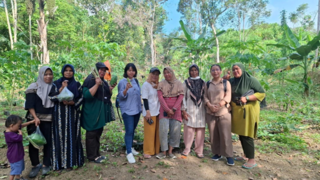
Blog
03 Dec, 2025
Digital violence is a malicious and increasingly pervasive form of gender-based violence (GBV). Online stalking and harassment are used to intimidate and silence women and girls, particularly those…
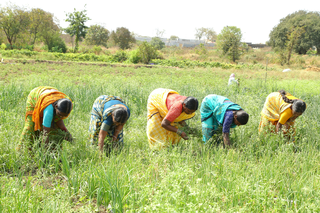
Blog
26 Nov, 2025
Gender-based violence (GBV) remains one of the most widespread and unacknowledged forms of human rights violations in the world. With data collected by UN Women revealing that every 10 minutes, a…
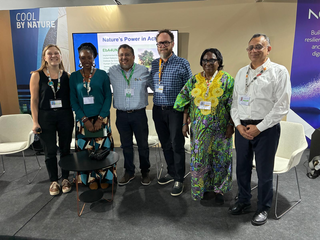
News
17 Nov, 2025
13 November 2025, Belém, Brazil, IUCN – At COP30, where the world is called to deliver on the “Global Mutirão” vision of collective, solutions-oriented action, IUCN’s Global Climate Change and Energy…

News
20 Oct, 2025
Climate adaptation is most effective when solutions are created with communities — not delivered to them. NAbSA is built on that notion. It is not a project toolkit. It is a people‑led pathway that…

Press release
13 Oct, 2025
Abu Dhabi, United Arab Emirates, 12 October 2025 (IUCN) – Today at the IUCN World Conservation Congress 2025, IUCN launched two new STAR metric resources to support the delivery of global…
News
18 Jun, 2025
Day 1 of the Nature, Climate and Gender Symposium highlighted the urgent need for integrated, justice-based climate solutions that centre Indigenous knowledge, gender equality, and locally led action.
News
18 Jun, 2025
Day 2 of the symposium explored how locally led, intersectional approaches—rooted in Indigenous knowledge, gender equity, and intergenerational justice—are essential to delivering inclusive and…

News
18 Jun, 2025
The final day of the Nature, Climate, and Gender Symposium brought into focus one of the most urgent challenges in the climate and development space: how to move beyond isolated pilot projects toward…