IUCN at UNESCO’s 5th World Congress of Biosphere Reserves
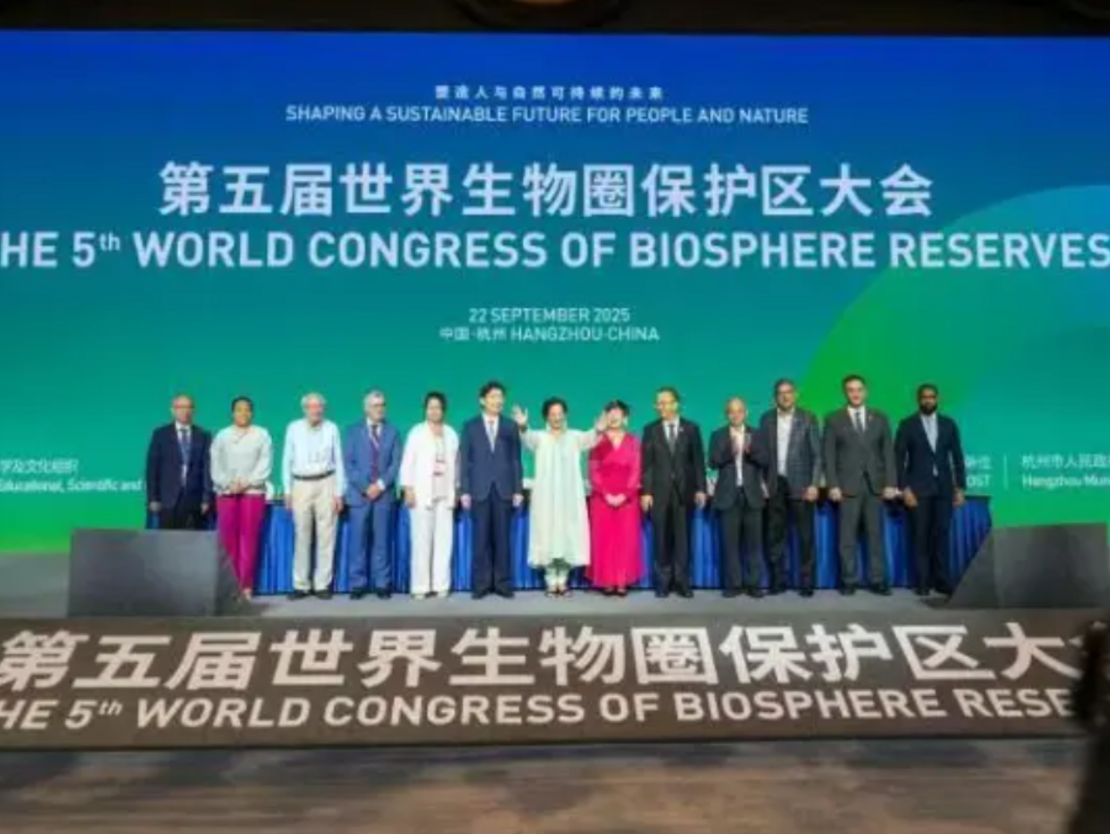
As a strong supporter of the UNESCO Man and the Biosphere Programme (UNESCO-MAB), IUCN was honoured to participate in the 5th World Congress of Biosphere Reserves hosted by the Municipality of Hangzhou (China).
A new strategic action plan (2026-2035)
During the 5th World Congress of Biosphere Reserves, the Hangzhou UNESCO-MAB Strategic Action Plan 2026–2035 has been adopted. The plan aims to support UNESCO Member States and other stakeholders in addressing major global challenges through the UNESCO-MAB Programme and the World Network of Biosphere Reserves and is built around three strategic objectives which each require urgent action:
- Contribute to the achievement of Multilateral Environmental Agreements and the Sustainable Development Agenda.
- Further develop the UNESCO-MAB Programme and the World Network of Biosphere Reserves (WNBR), including both human and financial resources, and strengthen the excellence of the Network.
- Develop research and share knowledge and lessons learned from the WNBR to facilitate Living in harmony with Nature, aligning with the SDGs, and inspire and influence sustainable futures and post-2030 agreements.
Among the about 30 actions are:
- By 2035, high-biodiversity areas in Biosphere Reserves suffer no net losses;
- By 2028, the potential of buffer zones and transition areas as Other Effective Conservation Measures (OECM) has been explored;
- By 2035, each UNESCO Member State has at least one Biosphere Reserve.
26 new biosphere reserves
Following the World Congress, the UNESCO-MAB International Coordinating Council convened from 26 to 28 September in Hangzhou (China). Based on the Council’s recommendations, UNESCO designated 26 new biosphere reserves across 21 countries, including Vjosa Valley (Albania), Khomyn Tal (Mongolia) and São Tomé and Príncipe – which becomes the first State to have its entire territory designated as a biosphere reserve. The World Network of Biosphere Reserves now includes 785 sites in 142 countries.
UNESCO’s 5th World Congress of Biosphere Reserves
Held every 10 years, the World Network of Biosphere Reserves comes together to identify priorities, strengthen collaboration, and define a Global Action Plan for the future. In 2025, the World Congress of Biosphere Reserves was hosted by the Municipality of Hangzhou and the Government of the People’s Republic of China, from 22 to 25 September. More than 2,000 international experts, public decision-makers, civil society, Indigenous representatives and youth came together to take stock of the achievements of the Man and Biosphere Programme.
IUCN and Biosphere Reserves
IUCN supports Biosphere Reserves worldwide through multiple initiatives — from improving management effectiveness through the IUCN Green List Standard and the work of the IUCN Commission on Ecosystem Management (CEM) Biosphere Reserves Thematic Group, to facilitating increased coordination with overlapping designations, preparing tools for managing and protecting nature, and supporting protected areas and local communities on the ground.
In 1966, IUCN welcomed UNESCO’s initiative on the biosphere “with the hope that it will draw the attention of Governments and public opinion to the urgent need for a new and bold approach to the conservation of the biosphere, including multiple rational use of natural resources”. Since the creation of the Man and the Biosphere (MAB) Programme in 1971, almost 800 reserves have been recognized, each organized into three interrelated zones: a core area, a buffer zone and a transition zone. Biosphere Reserves are often celebrated for their landscape-level approach, as a site for research and monitoring, and promoting local sustainable development ideas in rural areas.
Overlapping Designations
There are currently well over 3,500 Internationally Designated Areas (IDAs) recognized by various UN Agencies or multilateral organizations, including Ramsar sites and World Heritage sites, Biosphere Reserves, UNESCO Global Geoparks, and FAO’s Globally Important Agricultural Heritage Systems. Overlaps between these designations are becoming increasingly common — for example nearly half of all Biosphere Reserves overlap with at least another designation.
To address the challenges and opportunities that come with multiple designations, IUCN is currently updating its 2016 guidance manual. This earlier guidance provided key recommendations for site managers, national authorities and international bodies on enhancing the management effectiveness of these unique sites. It also informed the adoption of a resolution in 2016, calling for harmonised and integrated management of overlapping designations (IUCN encouraged national authorities for MIDAs to improve coordination and information sharing). Now, nearly a decade later, IUCN continues its work to support MIDAs in strengthening their contribution to the protection and sustainable management of the planet’s most recognized natural and cultural areas.


The 30th Conference of the Parties to the United Nation Framework Convention of Climate Change (…

Victoria Falls, Zimbabwe, 24 July 2025 — The Indo-Burma Ramsar Regional Initiative (IBRRI)…

World Wetlands Day is celebrated annually on 2 February. To celebrate this year’s theme of “…