IUCN Med and Fundación Moeve Unite for Wetland Restoration in Andalusia
On November 6-7, 2025, in San Roque, Huelva, Spain, IUCN Centre for Mediterranean Cooperation (IUCN Med) joined Fundación Moeve, and the Mediterranean Alliance for Wetlands (MAW), for a two-day event dedicated to biodiversity conservation and wetland restoration in southern Spain.
The event, organised by Fundación Moeve, brought together scientists, conservationists, and local authorities to exchange knowledge and address shared challenges, with the aim of strengthening regional collaboration and showcasing Nature-based Solutions (NbS) for sustainable management of Mediterranean wetlands. IUCN Med facilitated participation from seven key partners, including experts from Morocco, Greece, and Spain, fostering dialogue across the Mediterranean basin.
Biodiversity Day in San Roque
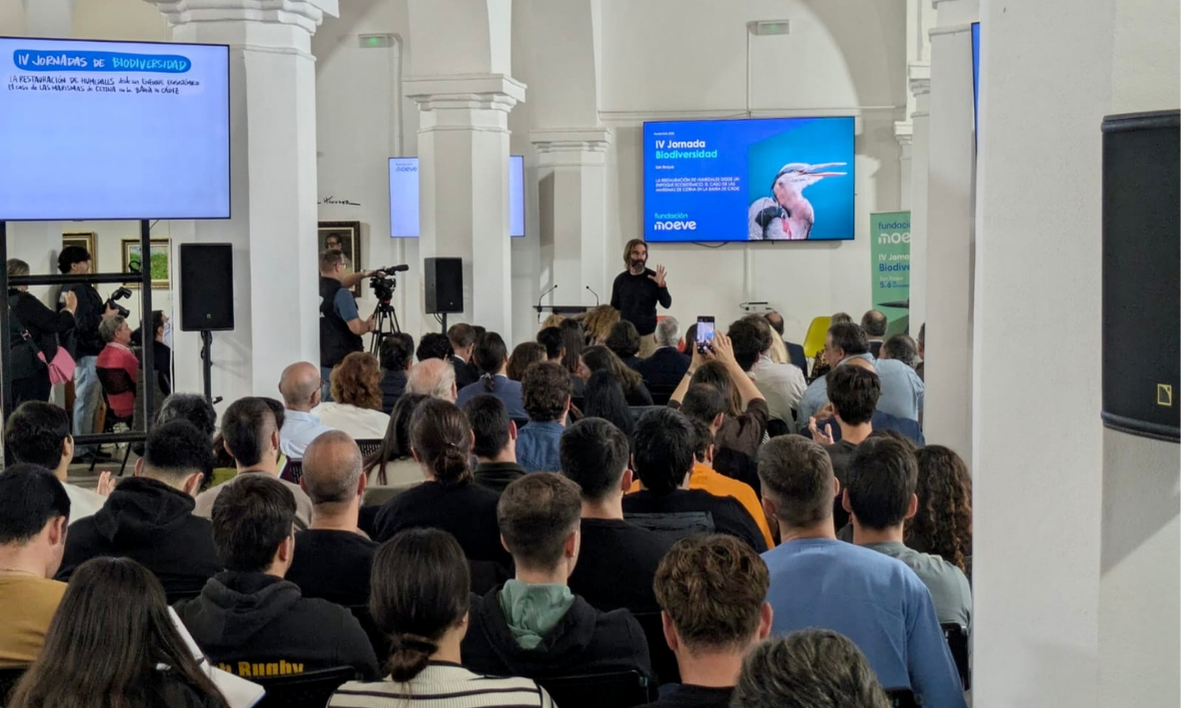
The first day saw the participants attend Fundación Moeve’s IV Jornadas de Biodiversidad. This offered a networking opportunity for experts, civil society organizations and Junta de Andalucia representatives to exchange. The event included presentations on wetland and saltpan management and a roundtable on species recovery and governance challenges, focusing on Eurasian spoonbill (Platalea leucorodia), marbled teal (Marmaronetta angustirostris), and Kentish plover (Charadrius alexandrinus).
Shining a light on Nature-based Solutions in restoration projects
The second day brought together participants from Fundación Moeve, IUCN Med, MAW, and Fundación Global Nature to discuss and engage on topics of wetland restoration, NbS, governance, water-use conflicts, and collaboration with stakeholders and public authorities.
Andrés Alcántara, from IUCN Med, presented the joint IUCN Med/Fundación Moeve Guide on NbS in Restoration Projects: Diseño de proyectos de recuperación de ecosistemas degradados. This guide provides essential support for the application of the IUCN Global Standard for Nature-based Solutions (NbS). Providing guidance on how to design restoration projects using the NbS guidelines, which can address environmental problems in a sustainable manner, facilitating their external assessment and verification. In addition, Fundación Moeve’s restoration sites are explored in the document as case studies, demonstrating the application of the guide to real-life restoration projects.

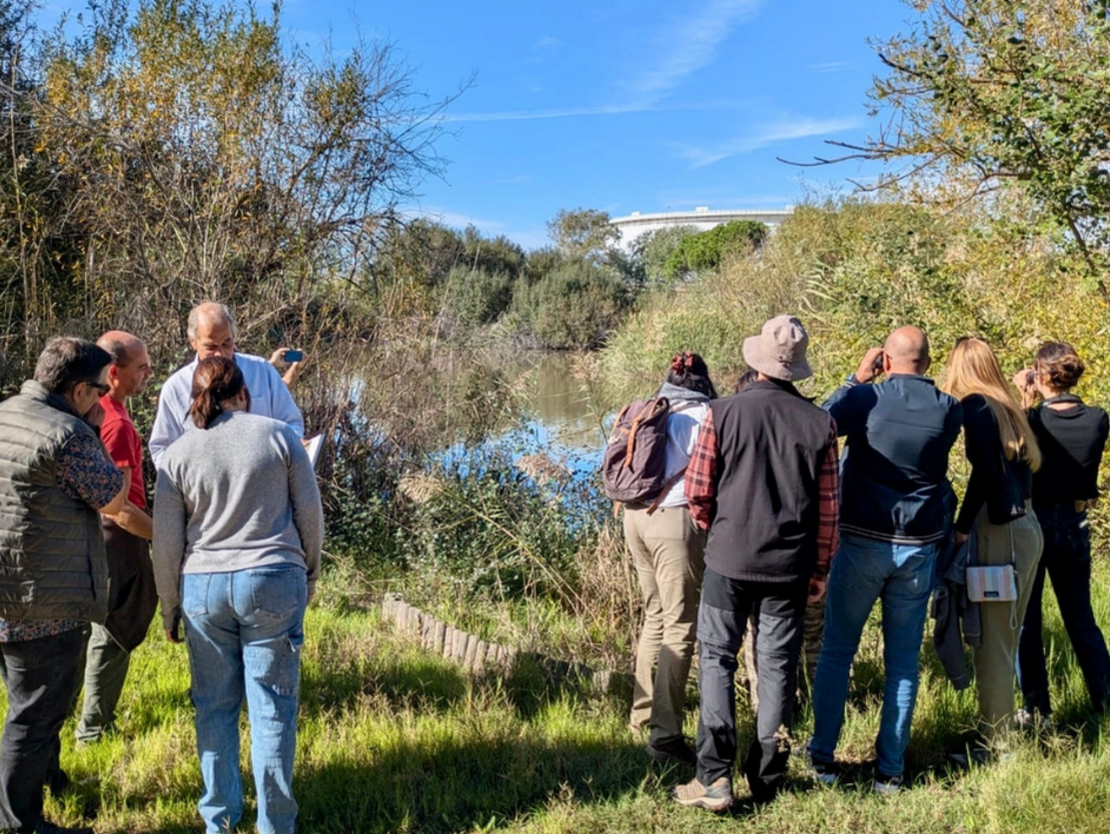
Technical Visit to Huelva Wetlands
The event closed with a field visit of restoration sites at Laguna Primera de Palos and Muelle de las Carabelas in Huelva. Guided by Moeve biologists, participants gained insights into and exchanged experience on:
Habitat restoration and invasive species control.
Managing agricultural impacts, sediment, and pesticide runoff.
Practical restoration techniques and governance strategies.

Key takeaways
The event strengthened technical knowledge sharing and regional connections, paving the way for replication of successful restoration models across the Mediterranean. Although wetlands continue to face threats, including illegal land use, water conflicts, and weak policy enforcement - many of which are shared amongst Mediterranean wetlands - restoration is achievable. For restoration efforts to be successful NbS and scientific research integration, which can benefit biodiversity conservation and water cycle management, is required. Engaging local stakeholders, such as farmers, aligning conservation goals with productivity and local ownership is equally crucial.


The 30th Conference of the Parties to the United Nation Framework Convention of Climate Change (…

Victoria Falls, Zimbabwe, 24 July 2025 — The Indo-Burma Ramsar Regional Initiative (IBRRI)…

World Wetlands Day is celebrated annually on 2 February. To celebrate this year’s theme of “…