Farmers Thrive as St. Kitts and Nevis Embraces Climate-Smart Agriculture
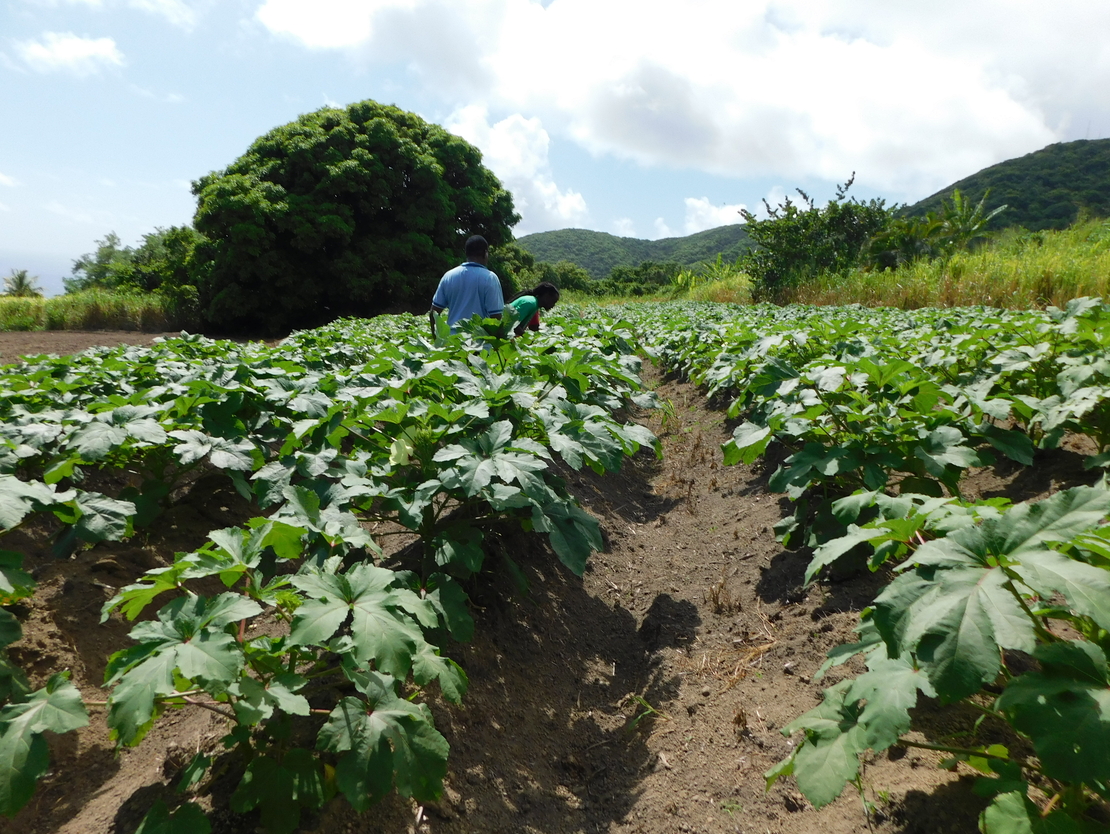
Once burdened by erratic rainfall and limited resources, farmers in St. Kitts and Nevis faced an uphill battle to sustain their livelihoods. But a shift is underway. With new investments in sustainable land management and tailored support for farming communities, a wave of transformation is taking root and reviving not just the land, but the hope and resilience of those who work it.
Under the Improving Environmental Management through Sustainable Land Management in St. Kitts and Nevis project, funded through the Global Environment Facility (GEF), implemented by the United Nations Environment Programme (UNEP) and executed by the International Union for Conservation of Nature (IUCN), farmers like Otis Jeffers, based in St. Kitts, have benefited from a combination of technical assistance, training, and environmental mapping, giving them the resources and knowledge to farm more sustainably and profitably.
“The drought period has been one of my greatest challenges as a farmer, [...] There were days I stood in my field, watching healthy crops slowly wither, not being able to supply them with adequate water. It was discouraging at times, but with the support from this project I was able to experience a major improvement, [...] Through the installation of a water catchment system, I now have a reliable source of water, even during the dry spells. I can irrigate my crops consistently and plan better. My yields have improved, and so has my confidence in the future for my farm”.
- Otis Jeffers.

The project helped identify degraded lands through digital mapping and Geographical Information Systems (GIS) tools, guiding reforestation and sustainable farming efforts. Farmers now understand where to plant, what to avoid, and how to manage resources without harming ecosystems.
Through hands-on workshops and technical training, over 50 farming groups and cooperatives in St. Kitts and Nevis have acquired a diverse range of practical skills that are transforming the way they farm. To date, farmers have benefitted from training in integrated pest management, contour ploughing, and composting to improve soil nutrient management. They also benefitted from technical advice on climate. More farmers have now embraced sustainable land management methods to combat erosion and improve soil health. In addition, training in grant writing and project management has empowered them to seek out and secure funding opportunities, further strengthening their capacity to grow resilient, thriving agricultural enterprises.
Beyond training, the project delivered real, tangible support including inputs to improve crop yield, materials for soil and water conservation, support through services to reduce soil erosion and prepare land, as well as plants and seedlings.
“With the support I received, including ground covers, drip lines, fencing wire, and seedlings for nearly half an acre, my farm has seen a remarkable turnaround [...] The yield after this assistance was truly bountiful and I’m deeply grateful. [...] But the journey doesn’t end here. There’s still important work ahead if we’re going to build true resilience and overcome the growing impacts of climate change”
- Akeisha Ferguson, local farmer, based in Nevis.

Just a few years ago, farming in St. Kitts and Nevis often felt like guesswork. Many farmers worked on lands that were either degraded or poorly suited for agriculture, with little access to technical support or reliable guidance. Sustainable practices were rarely part of the conversation, and coordination between ministries and farmers was minimal. Yields were inconsistent, and income unreliable.
“The tools and support I have received have really helped me manage my farm more efficiently, especially in the area of integrated pest and weed management, [...] I’m able to suppress weed growth, conserve water, and ultimately boost my production. Weed management is one of the highest costs in farming, so having effective strategies in place makes a big difference, [...] The drip irrigation system has also been a game-changer. It delivers water directly to the roots of my crops, minimizing waste and making much better use of limited water resources.”
- Quincy Bart, a farmer based in Nevis.

Today, support is no longer fragmented. Ministries and departments now work in close coordination with the project to provide farmers with practical advice, equipment, and even guidance on accessing funding through the development of a financing model for sustainable land management. As a result, farmers are seeing improved soil health and better yields.
According to Ryan Kahdou, owner of a local farm in Nevis:
“Donations of matting might sound simple, but it’s actually a smart engineering phenomenon [...] The matting allows water to seep through and soak into the soil, helping to maintain its structure and health [...] It reduces erosion, minimizes compaction, and speeds up recovery so within weeks, the land is ready for planting again. This kind of innovation proves that a smarter, more sustainable approach to farming is not just possible, but necessary”.
The shift is more than technical; it is cultural. The view of farming as a struggle for a means of survival is largely an old perspective. Farming in St. Kitts and Nevis can be viewed as a profession rooted in knowledge, resilience, and stewardship of the land.
Perhaps the most inspiring result of the project is its investment in the next generation of agricultural leaders. Young professionals and women have been empowered through scholarships and leadership training, ensuring that farming in St. Kitts and Nevis is no longer viewed as a struggle but as a profession of pride and promise.