Community-Based Adaptation (CBA Scale+)
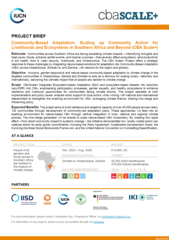
Communities across Southern Africa are increasingly vulnerable to the intensifying impacts of climate change, including from prolonged droughts, extreme heatwaves, floods, heavy rainfall and tropical cyclones. These climate shocks are placing immense pressure on ecosystems, degrading soil health, reducing land productivity, and threatening food and water security, livelihoods, and infrastructure. In response to these growing challenges, the Community-based Adaptation (CBA) Scale Southern Africa+ Project has emerged as a strategic initiative aimed at scaling nature-based CBA efforts across Mozambique, Zimbabwe, and Zambia, with broader ambitions to influence adaptation practices regionally and globally.

At the heart of the project is a commitment to inclusive, gender-responsive, and ecosystem-based approaches that empower communities to lead their own adaptation processes. By integrating CBA with Ecosystem-based Adaptation (EbA), the project emphasizes participatory planning, gender equality, and the restoration and protection of healthy ecosystems as essential foundations for building resilience. This integrated approach not only supports communities in navigating climate shocks but also enhances their livelihood opportunities and long-term sustainability.
The project operates on multiple levels, supporting grassroots action while simultaneously engaging with national and international stakeholders to strengthen the enabling environment for CBA. Through policy advocacy, capacity building, and resource mobilization, CBA Scale+ creates pathways for scaling up successful local practices and unlocking climate finance. These efforts are designed to foster vertical integration, ensuring that community-led adaptation plans inform and shape local, national, and international climate policy.
With a goal of reaching over 45,000 people across nearly 100 communities and wards, the project is facilitating the development of locally tailored adaptation plans that reflect the unique needs and knowledge of each community. These plans serve as blueprints for broader systemic change, demonstrating how locally rooted, nature-based community adaptation can ripple outward to influence policy, mobilize resources, and inspire action across the adaptation and conservation communities. By sharing knowledge and lessons learned, the project aims to scale nature-based CBA horizontally, contributing to global efforts to meet the Paris Agreement, the Sustainable Development Goals, and the Kunming-Montreal Global Biodiversity Framework. Through this comprehensive and collaborative approach, the CBAScale+ Project exemplifies how community-led action can drive transformative change in the face of the interconnected climate-biodiversity-development crisis.
State of Implementation/Results
National Project Launch and Progress in Climate Adaptation Measures:
- Successful national launch events were held in Mozambique, Zambia, and Zimbabwe, bringing together representatives from the German Embassy, BMUV, national and local governments, and civil society. These events fostered strong collaboration and reinforced commitment to the project.
- Participatory Climate Vulnerability Assessments (PCVAs) were successfully completed in Zambia and Zimbabwe, providing valuable insights for future actions. In Mozambique, the process is set to begin soon.
- The development of Community Adaptation Action Plans (CAAPs) has started in Zimbabwe, marking an important step in strengthening local communities' climate resilience.
- Significant progress has been made in the analysis of the enabling environment for CBA in Zambia and Zimbabwe. In Mozambique, this work will commence soon.
- Zambia and Zimbabwe: The PCVAs were carried out. Valuable insights into local climate vulnerability and a basis for future measures; Mozambique to follow.
- Analyses of the framework conditions for CBA measures were carried out to identify opportunities and challenges for effective adaptation strategies.
- Zimbabwe: Development of CAAPs: Beginning a structured approach to building community resilience and adapting to climate challenges.
Learn more about this project through the International Climate Initiative’s (IKI) project page and the International Institute for Sustainable Development’s (IISD) blog post.
Partners