Beyond Protected Areas: How OECMs help strengthen One Health approach and deliver on the Global Biodiversity Framework
As countries advance implementation of the Global Biodiversity Framework (GBF), growing attention is being given to how area-based conservation can support biodiversity while also benefiting human and animal health. These questions were at the centre of the 1Health4Nature webinar Beyond Protected Areas: understanding the role of Other Effective Area-Based Conservation Measures (OECMs), held on 9 December 2025. The discussion explored how OECMs can complement protected areas by recognising effective conservation in working landscapes, particularly in Central Asia, where rangelands, cultural landscapes and community-managed natural resources are key to ecological connectivity, resilience and One Health outcomes.
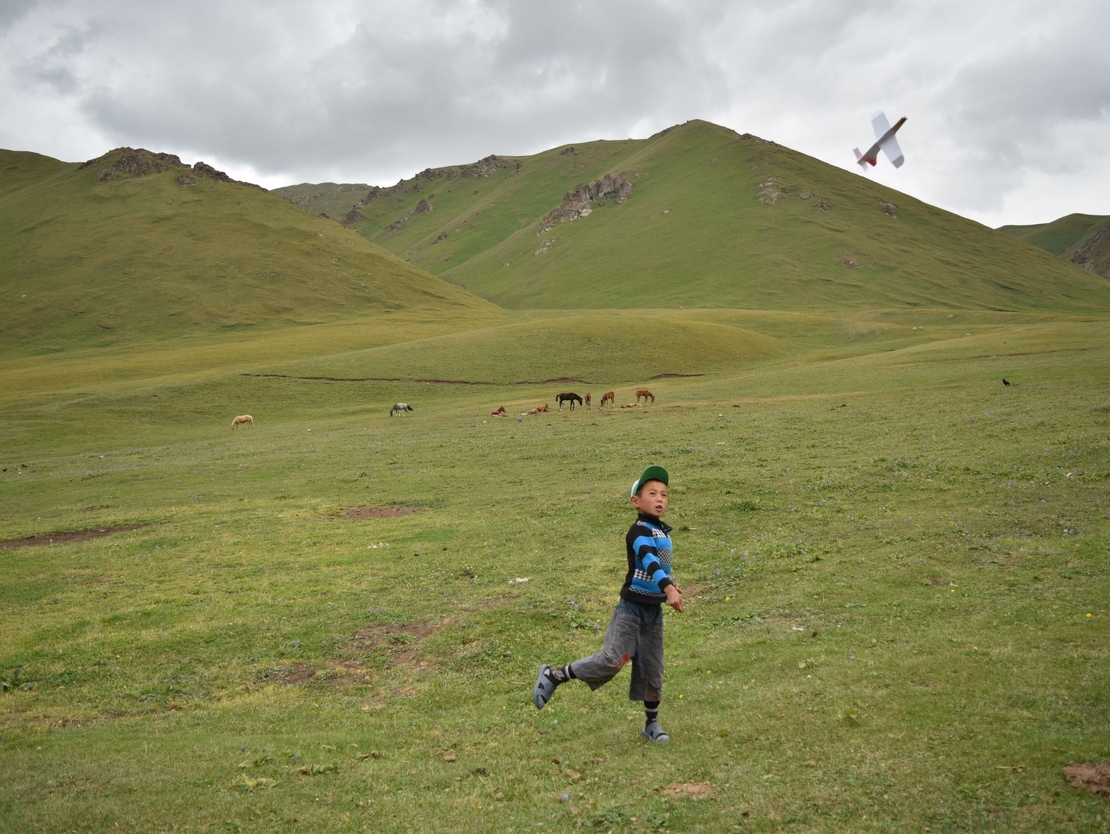
Recognising conservation where it already happens
The Convention on Biological Diversity recognises OECMs as geographically defined areas that deliver long-term, effective in situ biodiversity conservation, even when conservation is not their primary management objective. They may include community-managed pastures, sacred natural sites, sustainably managed forests, wildlife migration corridors or cultural landscapes shaped by traditional land use.
“OECMs offer a way to recognise existing systems that are already delivering conservation outcomes, even when conservation is not the main management objective,” explained Jennifer Kelleher, IUCN Programme Lead for Governance, Equity and Rights. In Central Asia, where stewardship is often embedded in everyday land-use practices, recognising such areas as OECMs acknowledges their contribution to biodiversity without altering their purpose, while reinforcing respect for local values and rights.
OECMs and delivery on GBF Target 3
GBF Target 3 calls for at least 30% of the world’s land, freshwater and ocean areas to be effectively conserved by 2030. Achieving this target will require more than expanding formal protected areas alone. OECMs enable countries to recognise conservation contributions made by Indigenous peoples, local communities, pastoralists and private actors, where biodiversity persists through traditional knowledge and sustainable resource use.
“Despite growing recognition of OECMs, reporting is constrained by gaps in knowledge and technical capacity, as assessments are highly context-specific and require careful, case-by-case application,” reminded Kelleher. Limited incentives and tangible benefits for custodians and site managers also continue to limit uptake, underscoring the importance of targeted guidance, capacity-building and support.
From local recognition to global accountability
Global reporting plays a key role in ensuring visibility and accountability. “Protected Planet is a platform for collating and sharing data on both protected areas and OECMs worldwide,” highlighted Emily Howland, Programme Officer – Nature Conserved at UNEP-WCMC. Integrating OECMs into national reporting systems helps track progress towards GBF Target 3, identify gaps in ecological representation and connectivity, and strengthen conservation planning.
Reporting an OECM to Protected Planet requires consent from the site’s governing authority - government, Indigenous peoples, local communities or private actors - with free, prior and informed consent essential where Indigenous peoples and local communities are involved. Sites must then be documented in line with agreed data standards, verified for accuracy, and supported by a data contributor agreement.

Strengthening the One Health connection
The One Health approach recognises the interdependence of ecosystem, animal and human health. Degraded and fragmented environments can heighten disease risks, while intact ecosystems can help regulate ecological processes and reduce exposure pathways.
"Well-managed protected and conserved areas allow for natural barriers that help prevent the transmission of contagious diseases,” reminded Tatiana Ivanova, Conservation Action Project Officer, IUCN Regional Office for Eastern Europe and Central Asia (ECARO). OECMs are particularly relevant in landscapes where people and nature interact daily, helping maintain ecological integrity while supporting livelihoods.
In Central Asia, climate change, land degradation, overgrazing and habitat fragmentation pose growing risks to ecosystem stability. At the same time, governments are strengthening alignment with the GBF and integrating nature into development planning. OECMs can help bridge sectoral priorities by expanding conservation networks, supporting zoonotic risk reduction, reinforcing sustainable resource use, and providing entry points for aligned investments in climate adaptation and rural resilience.
OECMs can serve as a bridge between sectors:
- For environmental authorities, they expand conservation networks and strengthen ecological connectivity;
- For health and veterinary institutions, they help identify landscapes that reduce zoonotic risk and support healthy wildlife populations;
- For communities and local governments, they reinforce sustainable resource use and recognise long-standing stewardship;
- For development partners, they offer a practical entry point for aligned investments in landscape management, climate adaptation and rural resilience.
National experience also demonstrates the value of enabling conditions. Drawing on Japan’s approach, Hana Matsuzaki, Junior Professional Officer for Protected and Conserved Areas at IUCN, highlighted that “more than 1,000 organisations have joined the multi-sectoral 30x30 alliance for biodiversity in Japan,” illustrating how broad coalitions across government, business and civil society can support a whole-of-society pathway towards 30x30.
Practical lessons from piloting OECMs in Kazakhstan
Site-level pilots are critical for translating policy ambition into workable processes and consistent interpretation of OECM criteria. Michele Bowe, Senior Ecologist with the Royal Society for the Protection of Birds Kazakhstan Steppe Programme, shared lessons from pilots that initially focused on hunting areas, highlighting the need to test OECM applicability across a wider range of territories. These include buffer zones around protected areas, border protection zones, state forest land, wetlands and extensive semi-natural grasslands under pastoral use, all areas with significant potential for OECM recognition.
Bowe also pointed to practical constraints, noting that “field assessment of whole sites would be expensive, and there’s an underlying question of who would do this.” This underscores regional needs for scalable methods to evidence biodiversity values, investment in assessor training, clearer approaches to long-term governance and mechanisms to address competing land-use pressures.
Looking ahead
Through the 1Health4Nature initiative, IUCN and partners are strengthening technical capacity, cross-sectoral collaboration and understanding of how OECMs can contribute to biodiversity conservation and public health outcomes. In a region where ecosystems and communities are deeply interconnected, recognising effective conservation wherever it occurs is both a practical and forward-looking strategy.
Resources:
- Guidance on other effective area-based conservation measures (OECMs)
- Инструмент для локального выявления других эффективных мер сохранения природных территорий (ОЕСМ): Первое издание
- Site-level tool for identifying other effective area-based conservation measures (OECMs): first edition
- 30x30 Solutions website with links to interactive resources
- Recognising and reporting other effective area-based conservation measures
This webinar was organised in the frame of the One Health in nature conservation in Central Asia project (1Health4Nature) that aims to mitigate the risk of zoonosis - diseases naturally transmissible from animals to humans - by expanding the extent and strengthening conservation measures in natural and overlapping sociocultural areas. It seeks to address the relevant causes of epidemic risk and consolidate a fair and effective regional network of protected and conserved areas (PCAs). This project is implemented by IUCN in collaboration with a consortium of national and international organisations across five Central Asian countries, over 5 years (2024-2029), and supported by the International Climate Initiative (IKI) of the Federal Government of Germany. Within the Federal Government, the IKI is anchored in the Federal Ministry for the Environment, Climate Action, Nature Conservation and Nuclear Safety (BMUKN). Selected individual projects are also the responsibility of the Federal Foreign Office (AA).


The 30th Conference of the Parties to the United Nation Framework Convention of Climate Change (…

Victoria Falls, Zimbabwe, 24 July 2025 — The Indo-Burma Ramsar Regional Initiative (IBRRI)…

World Wetlands Day is celebrated annually on 2 February. To celebrate this year’s theme of “…